
Sadly, studies (Federal Interagency Forum on Child and Family Statistics, 2014) are showing depression and anxiety is on the rise for children and adolescents. The numbers. And those of us involved in community psychology understand that this impacts a multitude of systems on many different levels.
From individuals, to families, to neighborhoods, to communities, schools, employers and even medical costs, we are all impacted. While I’m sure there are a multitude of reasons for this increase, I would like to focus on something that I believe to be “right under our noses” and yet, hardly every brought up when discussing mental illness. I have to ask, what about nutrition, what impact does that have on mental illness?
For our bodies to perform at peak levels we need nutrition. For our brains to perform at peak levels, we need nutrition. Our body is one large organism that is connected, even though at times we use words that appear to create a separateness within our bodies. For example, “My head hurts, this darned knee is acting up,” are ways of stating that particular part of us is separate from the whole. Yet, we know biologically that our physical body is one organism always working as one.
When a part of our body is injured or not functioning properly, we will have physical repercussions in area’s other than the injured part. For example, if you have tendinitis in your left elbow, you will overcompensate with your right side. If you can’t straighten your left elbow without pain, you’ll hold tension in your shoulders, may be turn with your upper torso or lower trunk rather than your entire body. All of this creates an imbalance.
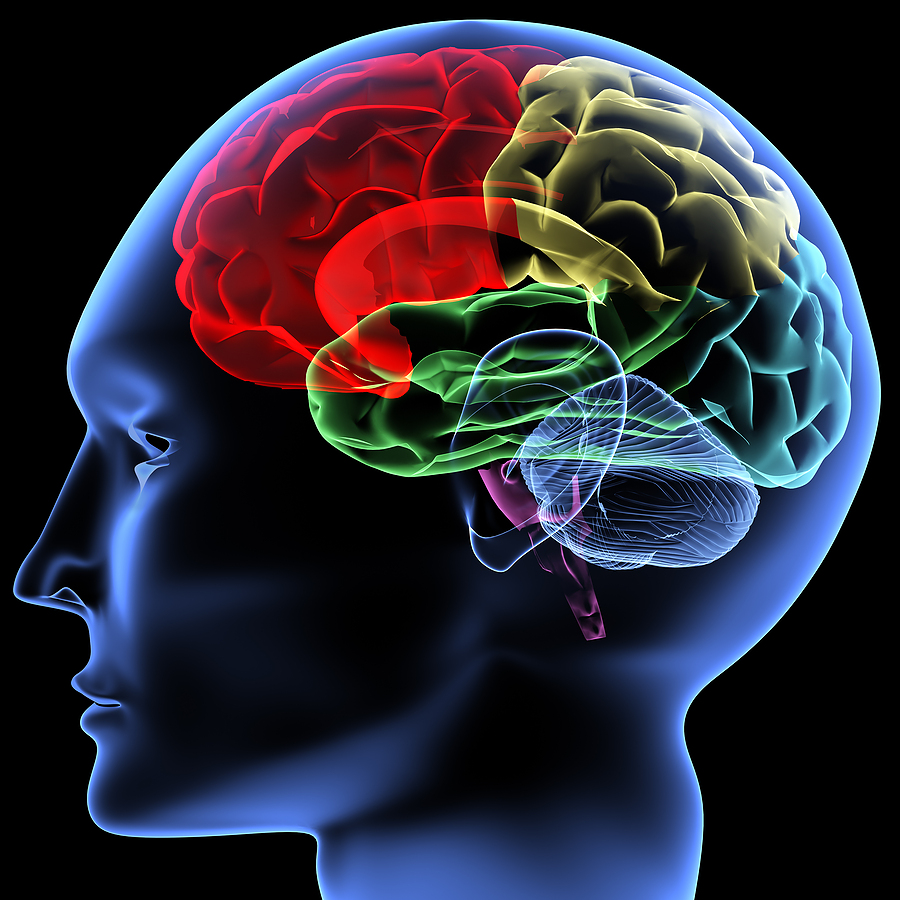
What does this have to do with nutrition and mental illness? Well, if you are lacking certain nutrients, or ingesting too much of one thing and not enough of another, this creates an imbalance, similar to what was described above. What is different about the nutrition scenario is that your brain/body may not be able to compensate for the nutritional imbalance.
 It is believed at one point in the history of human beings, our bodies used to create vitamin C. At some point there was a mutation in the GLO gene and that ability was lost.(Drouin, B, Godin, J, and Page, B, 2011) We were able to supplement this depletion by eating foods containing Vitamin C. Where'd the C go?
With the onslaught of the “fast food culture.” I will assume the majority agree that not only has the consumption of nutritional food declined, so has access to it, and our bodies are not able to compensate and produce the nutrients that are now lacking in our foods. We have chosen quantity and speed over quality. 1/3 of US kids and teens ate fast food today.
Studies have proven that children who don't have access to healthy food, do poorer in school, on testing and cognitive development (Tobin, 2013). So then I have to ask, why wouldn’t poor diet impact brain function on the mental illness level as well?
Results of an Australian study conducted over a 2-year period with 3040 adolescents ages 11-17 showed that diet impacted the mental health of participants. On year-two follow up concluded that healthier eating habits correlated with improved mental health, and unhealthy eating habits correlated with poor mental health. (Jacka F, Kremer P, Berk M, Silva-Sanigorski, A, Moodie M, Leslie E, Pasco J, Swinburne, B, 2011). A Dish of Mental Health
So to that point, I leave you with some food for thought.
Until next time…what’s on your plate?
References:
Drouin, Guy, Godin, Jean-Remi, Page, Benoit.(2011, August). The Genetics of Vitamin C Loss in Vertebrates. Retrieved February 07, 2016, from http://www.ncbi.nlm.nih.gov/pmc/articles/PMC3145266/
Federal Interagency Forum on Child and Family Statistics, (2014). Adolescent Depression. Retrieved February 05, 2016 from http://www.childstats.gov/americaschildren/health4.asp
Gorman, Linda. Eating Your Way to Higher Test Scores. National Bureau of Economic Research. Retrieved February 07, 2016. http://www.nber.org/digest/apr03/w9319.html
Jacka Felice, Kremer, Peter, Berk, Michael, Silva-Sanigorski, Andrea, Moodie, Marjorie, Leslie, Eva, Pasco, Julie, Swinburn, Boyd. (2011, September 21). A Prospective Study of Diet Quality and Mental Health in Adolescents. Retrieved February 5, 2016 from http://journals.plos.org/plosone/article?id-10.1371/journal.pone.0024805
NPR.(2015, September 21). A Third of kids and teenagers ate fast food today. Retrieved February 7, 2016 from http://www/npr/org/sections/thesalt/2015/09/17/44095139/about-a-third-of-u-s-kids-and-teens-ate-fast-food-today
Wilder Research. (2014, January). Nutrition and Students Academic Performance. Retrieved February 7, 2016 from
Wilder-Research/Publications/Studies/Fueling%20Academic%20Performance%20-%20Strategies%20to%20Foster%20Healthy%20Eating%20Among%20Students/Nutrition%20and%20Students'%20Academic%20Performance.pdf
Ross, A. (2008, July). Nutrition and its affect on Academic Performance. Retrieved February 07, 2016 from, https://www.nmu.edu/sites/DrupalEducation/files/UserFiles/Files/Pre-Drupal/SiteSections/Students/GradPapers/Projects/Ross_Amy_MP.p/
Tobin, KJ. ( 2013, Jan. 29) Child Care Health Dev. (1):118-24. doi: 10.1111/j.1365-2214.2011.01349.x. Epub 2011 Nov 25.
NPR.(2015, September 21). A Third of kids and teenagers ate fast food today. Retrieved February 7, 2016 from http://www/npr/org/sections/thesalt/2015/09/17/44095139/about-a-third-of-u-s-kids-and-teens-ate-fast-food-today
Wilder Research. (2014, January). Nutrition and Students Academic Performance. Retrieved February 7, 2016 from
Wilder-Research/Publications/Studies/Fueling%20Academic%20Performance%20-%20Strategies%20to%20Foster%20Healthy%20Eating%20Among%20Students/Nutrition%20and%20Students'%20Academic%20Performance.pdf
Ross, A. (2008, July). Nutrition and its affect on Academic Performance. Retrieved February 07, 2016 from, https://www.nmu.edu/sites/DrupalEducation/files/UserFiles/Files/Pre-Drupal/SiteSections/Students/GradPapers/Projects/Ross_Amy_MP.p/
Tobin, KJ. ( 2013, Jan. 29) Child Care Health Dev. (1):118-24. doi: 10.1111/j.1365-2214.2011.01349.x. Epub 2011 Nov 25.

I have always been one to believe that the healthier you eat the healthier your mind and I push this teaching onto my son. Thank you for providing me with the evidence of this. The research is very intriguing for me and you are correct about the "fast food" culture that we have become. I am trying to teaching my son that yes fast food is easier but it is not healthier. The struggle is with my current living situation, my housemates are always buying junk food and it is hard to tell my son "oh you can't eat that, but the other kids in the house can" I have been trying to get everyone in the hose to eat healthier but they do not listen. Maybe this article will help.
ReplyDeleteHeather Antoniewicz
Darcy: Overall, this is a very nicely done! A couple of things to consider - can you link us straight to the article (via Alverno library). You can find a permalink when you find the articles and if someone is on an Alverno computer then it will bring us directly to the article. Secondly, I could not find the Tobin article through the Alverno website. Do you have a copy of this article? Also, it needs to be included in your reference section. Finally, please re-think this sentence - "Studies have proven that children who don't have access to healthy food, do poorer in school, on testing and cognitive development (Tobin, 2016)." Since I couldn't find the article, I couldn't see what these "studies" are. And if there are indeed "studies" (vs. just the Tobin study) then these should be referenced. I like how you said that this study led you to ask questions about the impact of food/nutrition on mental health, instead of inferring that there is somehow a relationship there that we have yet to find. The format of this also looks very good. -Jessica B-L
ReplyDelete